
Serverless Computing in 2025: The Future of Backend Development?

Table of Contents
What Is Serverless Computing?
Serverless computing is a cloud-native model where developers write and deploy code without worrying about managing the underlying servers. Instead of provisioning, scaling, and maintaining infrastructure, the cloud provider automatically handles these tasks. Developers pay only for the compute time their code consumes, making it an attractive cost-saving solution.
This architecture typically revolves around Functions as a Service (FaaS) and Backend as a Service (BaaS). Services like AWS Lambda, Azure Functions, and Google Cloud Functions have been at the forefront, empowering developers to move faster while maintaining scalability and reliability.
My Hosting Choice
Need Fast Hosting? I Use Hostinger Business
This site runs on the Business Hosting Plan. It handles high traffic, includes NVMe storage, and makes my pages load instantly.
Get Up to 75% Off Hostinger →⚡ 30-Day Money-Back Guarantee

Why Serverless Is Gaining Popularity in 2025
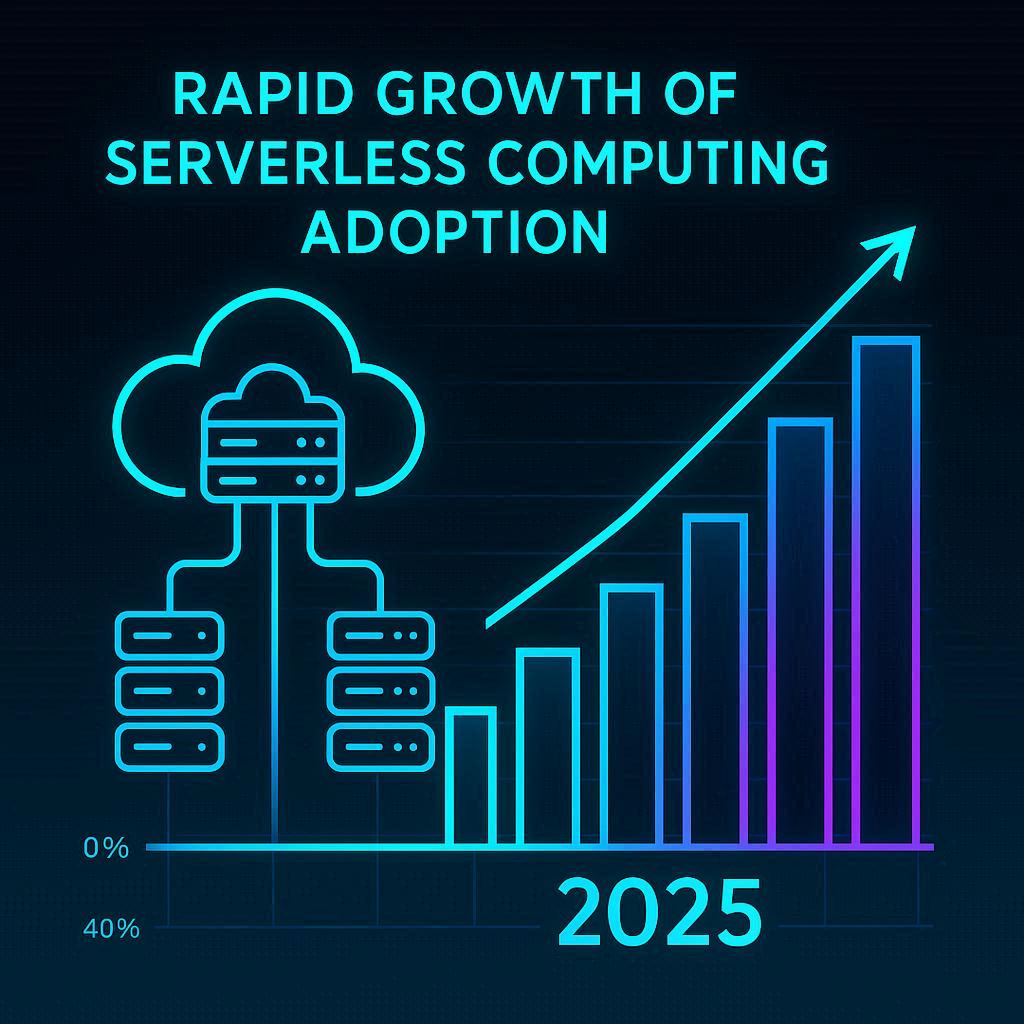
In 2025, serverless has gained significant traction for both startups and enterprises. The primary drivers include reduced operational costs, faster time-to-market, and seamless scalability. Businesses no longer need to hire large DevOps teams just to maintain uptime, as serverless providers guarantee high availability.
Another major advantage is the event-driven architecture. Applications can scale automatically based on demand—whether that’s 10 users or 10 million—without pre-configured servers. Additionally, the pricing model ensures that companies only pay for what they use, eliminating wasted resources.
If you want more details then see the pdf below
The Advantages of Serverless Computing in 2025
Serverless computing has matured significantly by 2025, offering developers and businesses a flexible and efficient approach to backend development. One of the key advantages is cost optimization. With serverless platforms, organizations only pay for the compute resources used during function execution, eliminating the need for idle server costs. This pay-as-you-go model has become particularly attractive for startups and enterprises managing unpredictable workloads.
Another major benefit is scalability on demand. Unlike traditional servers that require manual scaling or load balancing, serverless architectures automatically scale functions up or down based on real-time demand. For instance, if a web application suddenly experiences a traffic surge, serverless platforms handle the scaling seamlessly without downtime.
Moreover, serverless empowers developers with faster time-to-market. By removing the complexity of managing infrastructure, teams can focus entirely on writing and deploying code. This has made serverless an essential choice for modern agile development cycles, where speed and flexibility are non-negotiable.
Security has also improved with serverless providers in 2025. Cloud vendors are continuously patching and updating the underlying infrastructure, reducing the risk of vulnerabilities. This offloads significant responsibility from development teams while ensuring compliance with global data regulations.
Overall, serverless is no longer just a cost-cutting tool — it has evolved into a strategic enabler of innovation, giving organizations the freedom to experiment, iterate, and deploy with confidence.
Challenges and Limitations of Serverless Computing
Despite its promise, serverless computing in 2025 is not without its challenges. One of the most common concerns is the vendor lock-in problem. Since most serverless solutions are tightly integrated with specific cloud providers like AWS Lambda, Azure Functions, or Google Cloud Functions, migrating workloads between platforms can be complex and costly. Organizations must carefully weigh flexibility against convenience.
Cold start latency remains another issue, though providers have improved performance. When a function is triggered after being idle, there can still be noticeable delays, especially for latency-sensitive applications like financial transactions or gaming backends. While “warm starts” and caching techniques mitigate the problem, it hasn’t been fully eliminated.
From a monitoring and debugging standpoint, serverless adds complexity compared to traditional server-based systems. Distributed executions across microservices make it harder to trace errors, analyze logs, and ensure smooth application performance. Developers often rely on third-party observability tools, which increases operational overhead.
Additionally, while serverless is cost-efficient for intermittent workloads, it can become expensive at scale. Businesses running heavy or continuous workloads sometimes find traditional containerized infrastructure (like Kubernetes) more predictable and economical in the long run.
Finally, compliance and data residency laws pose another limitation. Serverless functions often run in multiple global regions, raising questions about where sensitive data is stored and processed. This forces organizations in regulated industries to tread carefully.
In summary, while serverless offers speed and flexibility, it’s not a one-size-fits-all solution. Developers must weigh these limitations before making it their primary backend strategy.
The Pros of Serverless Computing in 2025
Serverless computing has matured significantly since its early days, and by 2025, it brings a set of undeniable benefits that attract startups, enterprises, and even government projects. One of the biggest advantages is cost efficiency. With serverless, you only pay for the exact compute resources consumed during execution, which eliminates the burden of over-provisioning or paying for idle server time. This makes it especially appealing for businesses that experience unpredictable traffic spikes, such as e-commerce platforms or streaming services.
Another advantage is faster time-to-market. Developers can focus entirely on writing business logic without worrying about server provisioning, patching, or load balancing. This simplification accelerates product development and encourages innovation. Moreover, serverless integrates smoothly with modern DevOps practices, offering CI/CD pipelines, automated scaling, and built-in monitoring tools.
Additionally, scalability and elasticity stand out as core strengths. For instance, an application experiencing millions of concurrent requests can scale effortlessly without the need for manual intervention. This “invisible infrastructure” advantage enables organizations to serve global audiences without downtime or latency concerns.
The Cons and Challenges of Serverless in 2025
Despite the hype, serverless computing is not without its drawbacks. The most pressing issue remains the vendor lock-in problem. Applications built on specific serverless frameworks (e.g., AWS Lambda, Azure Functions, Google Cloud Functions) often become tightly coupled with proprietary APIs, making migration to another platform difficult and expensive. This lack of portability is a growing concern for businesses that prioritize long-term flexibility.
Useful Links
Another challenge is cold starts, where a function takes noticeable time to respond after being idle. Although providers have improved response times over the years, high-performance workloads such as gaming, financial transactions, or real-time analytics still face delays that can impact user experience.
Additionally, debugging and monitoring serverless applications are more complex compared to traditional setups. Since functions are distributed and event-driven, tracing errors across multiple microservices can become a nightmare without advanced observability tools. Moreover, costs can unexpectedly escalate for applications with high invocation rates, which counters the “cheap” narrative often associated with serverless.
Finally, data residency and compliance pose significant barriers for regulated industries. With functions running across distributed servers worldwide, ensuring compliance with GDPR, HIPAA, or other laws can be complex and risky.
Cost Considerations: Serverless vs. Traditional Backends
One of the biggest selling points of serverless computing is its pay-as-you-go pricing model. Instead of renting dedicated servers 24/7, developers only pay for the actual compute resources consumed by each request. This makes serverless appealing for startups, small businesses, or applications with spiky traffic patterns.
For instance, an e-commerce site may experience a surge in traffic during Black Friday sales but remain relatively quiet the rest of the year. Serverless ensures that businesses don’t overpay for idle infrastructure during low-demand periods.
However, serverless isn’t always the most cost-efficient solution. For applications with high, steady workloads, the cost per request can exceed that of running a traditional server or even containerized workloads on Kubernetes. Additionally, some hidden costs — like API gateway charges, cold start penalties, and vendor-specific monitoring services — can make monthly bills unexpectedly high.
Ultimately, the decision comes down to workload type: if your app has unpredictable or low-volume traffic, serverless often wins. If you’re running a large-scale, constant workload, traditional or container-based architectures might still be more economical.
The Role of Containers and Kubernetes Alongside Serverless
While serverless has gained popularity, containers and Kubernetes are far from obsolete. In fact, many enterprises are adopting hybrid approaches, blending the strengths of serverless with containerized applications.
Containers excel in scenarios where developers need more control over runtime environments, dependencies, and consistent scaling across microservices. Kubernetes, with its orchestration capabilities, makes it possible to run complex workloads at scale, with fine-grained networking, storage, and monitoring.
On the other hand, serverless simplifies development by abstracting infrastructure management. Rather than competing, these two technologies are increasingly being used side by side. For example, an organization might use Kubernetes to manage heavy backend microservices, while leveraging serverless for event-driven functions such as sending notifications, processing image uploads, or running scheduled tasks.
This complementary approach allows teams to balance flexibility, cost, and scalability while avoiding vendor lock-in. As cloud platforms continue to evolve, we can expect more seamless integrations between Kubernetes ecosystems and serverless frameworks.
📝 Conclusion
Serverless computing has undeniably transformed how developers build, scale, and deploy applications. In 2025, it’s no longer just a “trend” but a mainstream architectural choice for startups, enterprises, and even government platforms. Its cost-efficiency, scalability, and reduced operational overhead make it an attractive option for many teams.
However, serverless is not a one-size-fits-all solution. Applications with predictable workloads, real-time streaming, or extremely low-latency demands may find better performance with traditional cloud infrastructure or hybrid models.
The future of backend development may not be entirely serverless, but it’s clear that serverless will play a pivotal role in shaping modern application architecture. Developers who understand its strengths and limitations will stay ahead in a competitive digital landscape.
👉 In short: Serverless is here to stay, but its true power lies in how you integrate it with other technologies in your stack.
FAQS
Q1. What is serverless computing in simple terms?
Serverless computing means developers don’t have to manage servers directly. Instead, they just write code, and the cloud provider automatically allocates resources, scales the app, and charges only for execution time.
Q2. Is serverless cheaper than traditional cloud hosting?
Yes, in most cases. Serverless is cost-effective for apps with unpredictable traffic because you only pay when functions run. However, for apps with constant heavy traffic, a reserved cloud server may be cheaper.
Q3. Will serverless replace traditional backend development?
Not completely. Serverless is excellent for event-driven apps, APIs, and microservices, but traditional servers still dominate use cases requiring constant processing, high-performance workloads, or legacy compatibility. A hybrid approach is often the best choice.

🚀 Let's Build Something Amazing Together
Hi, I'm Abdul Rehman Khan, founder of Dev Tech Insights & Dark Tech Insights. I specialize in turning ideas into fast, scalable, and modern web solutions. From startups to enterprises, I've helped teams launch products that grow.
- ⚡ Frontend Development (HTML, CSS, JavaScript)
- 📱 MVP Development (from idea to launch)
- 📱 Mobile & Web Apps (React, Next.js, Node.js)
- 📊 Streamlit Dashboards & AI Tools
- 🔍 SEO & Web Performance Optimization
- 🛠️ Custom WordPress & Plugin Development