
How to Write Content That Both Search Engines and AI Assistants Understand in 2025

For years, digital marketers and publishers optimized content almost entirely around Google and other traditional search engines. But the rise of generative AI chatbots – tools that don’t just link, but summarize – has reshaped the way users consume information. Today, it’s no longer enough to secure a top spot in search rankings; you must also be cited and surfaced by AI systems.
This raises an urgent question: how can we create content that performs well in both search engines and generative AI environments?
My Hosting Choice
Need Fast Hosting? I Use Hostinger Business
This site runs on the Business Hosting Plan. It handles high traffic, includes NVMe storage, and makes my pages load instantly.
Get Up to 75% Off Hostinger →⚡ 30-Day Money-Back Guarantee
Where Users Are Heading: Search Engines vs. Generative AI
Search still dominates, but the usage landscape is shifting. Statcounter’s Search Engine Market Share highlights Google’s continued dominance in traditional search, yet these numbers don’t reflect the rise of AI chatbot usage.
- According to One Little Web (April 2025), AI chatbots generated 34x fewer visits than search engines – but grew 80.9% YoY between April 2024 and March 2025.
- By mid-2025, Chillibyte reported 55.2 billion visits to ChatGPT alone in a 12-month period, marking an 80% increase year-over-year.
The takeaway? AI isn’t replacing search yet – instead, it’s supplementing it. But as adoption grows, marketers must prepare for a world where traffic splits between search rankings and AI citations.
👉 Related Read: Prompt Engineering for AI Assistant Accuracy in 2025: Developer Tips & Pitfalls
How Search Rankings Differ from AI Citations
To succeed in this dual environment, it’s important to understand how search engines and AI systems process and rank content.
If you want more details with visuals, see the pdf below
Search Engines: Simple Queries, Complex Algorithms
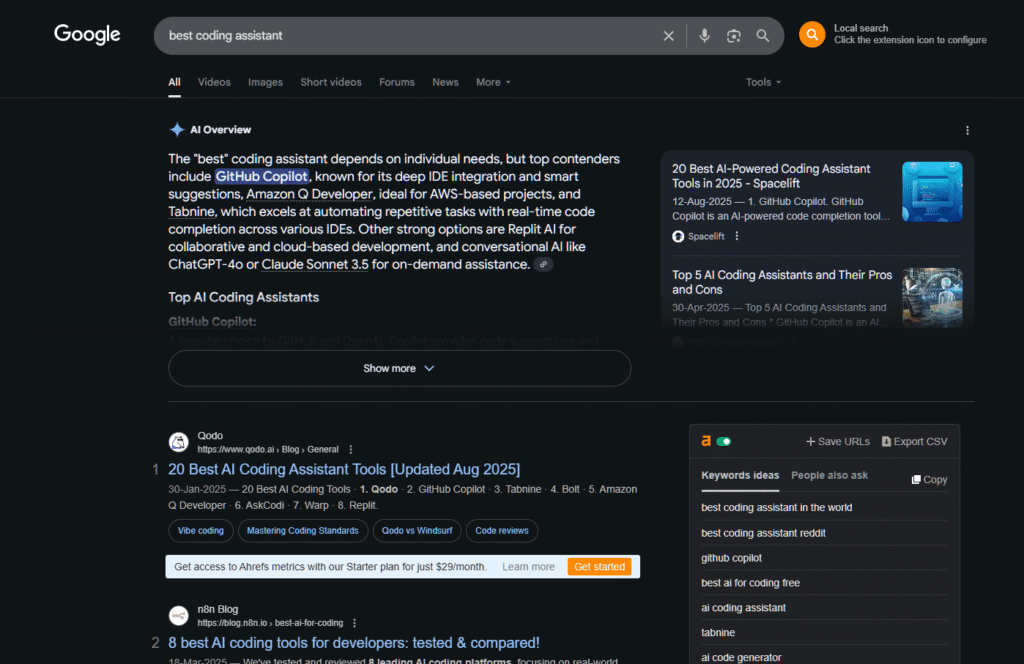
Search inputs are typically short (e.g., “classic car insurance UK”) and outputs are straightforward – a list of URLs. However, beneath that simplicity lies Google’s layered algorithms, which evaluate:
- Metadata, headings, and keyword usage.
- Content trustworthiness & E-E-A-T signals.
- Inbound link quality and authority.
- Local signals, reviews, and structured data.
Over the years, algorithm updates like Penguin, Panda, and Caffeine have refined search rankings, eliminating manipulative tactics. This makes Google’s system complex yet reliable.
Generative Engines: Complex Queries, Simpler Filters
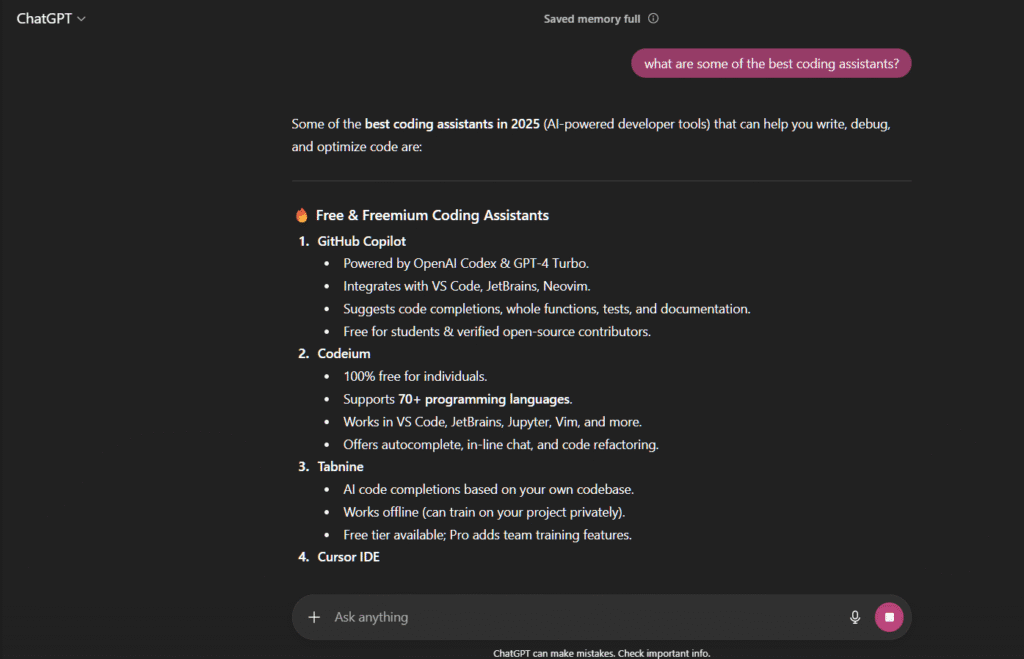
AI chatbots like ChatGPT process richer, conversational inputs and produce more nuanced outputs. However, their ranking systems are algorithmically simpler compared to Google.
Instead of complex ranking signals, AI often relies on:
- Co-citations (mentions alongside key terms/brands).
- Limited sources compared to search.
- Semantic context more than exact-match backlinks.
This opens opportunities – strategies discarded by traditional SEO may still earn visibility in AI-generated outputs.
Useful Links
- The Era of Small Language Models (SLMs): Why 2026 Belongs to Edge AI
- Microsoft AutoGen vs. CrewAI: I Ran a “Code Battle” to See Who Wins in 2026
- How to Build AI Agents with LangChain and CrewAI (The Complete 2026 Guide)
- Beyond the Chatbot: Why 2026 is the Year of Agentic AI
- Why Developers Are Moving from ChatGPT to Local LLMs (2025)
- LangChain vs. LlamaIndex (2026): Which AI Framework Should You Choose?
👉 Related Read: Prompt Engineering for AI Assistant Accuracy in 2025: Developer Tips & Pitfalls
Producing Content That Works for Both Search and Generative AI
Here’s the good news: much of what benefits search engines also helps AI systems. The key is structured, accessible, and citation-friendly content.
Best Practices for Search + AI Alignment
- Use clear headings, supporting stats, and rich media.
- Ensure accessibility (AI crawlers may struggle with JavaScript-heavy sites).
- Build strong E-E-A-T signals (brand, author authority, trust).
- Optimize metadata, alt text, and schema markup.
- Write in-depth content that covers related entities and semantic variations.
- Incorporate Q&A and FAQ formats, since AI prompts are often phrased as questions.
- Provide summaries and takeaways for easy vectorization.
AI-Specific Enhancements
- Focus on co-citations over backlinks. Mentions alongside authority sources matter more for AI.
- Maintain consistency in brand details (AI blends vectorized info across multiple documents).
- Keep key facts concise – short, factual statements vectorize better.
- Use structured summaries and highlight data in clear formats.
- Cover both broad entities and compact terms, as RAG agents distill queries into simpler keywords.
In short: to thrive in 2025, content must satisfy Google’s complex algorithms AND generative AI’s simpler but citation-driven systems.
Final Thoughts
Search and generative AI aren’t enemies – they’re becoming two sides of the same coin. Google may still drive the majority of traffic, but AI’s rapid growth signals a future where visibility depends on mastering both ecosystems.
The winning strategy? Create credible, structured, and context-rich content that earns search rankings and AI citations. Those who adapt now will dominate the evolving digital landscape.
FAQs
1. How does AI help with SEO content creation?
AI tools streamline keyword research, content structuring, and optimization, ensuring that articles are both reader-friendly and search-engine friendly. They help in generating topic ideas, analyzing competitors, and improving on-page SEO.
2. Can AI-generated content rank on Google?
Yes, AI-generated content can rank on Google if it provides real value, is well-structured, and optimized. However, it must pass the E-E-A-T (Experience, Expertise, Authoritativeness, and Trustworthiness) guidelines, which means adding human input and fact-checking is essential.
3. What are the risks of using AI for blogging?
The main risks include producing generic or duplicate content, factual inaccuracies, and lack of originality. To avoid this, AI-generated drafts should always be refined and fact-checked by a human editor.
4. Which AI tools are best for SEO writing in 2025?
Some popular AI SEO tools include SurferSEO, Jasper, Copy.ai, Writesonic, and SEMrush AI Writer. Each comes with unique features like keyword clustering, competitor gap analysis, and SERP optimization.
5. Can AI replace human writers completely?
No. AI can accelerate research and content drafting, but human creativity, personal experiences, and nuanced insights are irreplaceable. The best approach is a human + AI hybrid workflow for maximum efficiency and authenticity.

🚀 Let's Build Something Amazing Together
Hi, I'm Abdul Rehman Khan, founder of Dev Tech Insights & Dark Tech Insights. I specialize in turning ideas into fast, scalable, and modern web solutions. From startups to enterprises, I've helped teams launch products that grow.
- ⚡ Frontend Development (HTML, CSS, JavaScript)
- 📱 MVP Development (from idea to launch)
- 📱 Mobile & Web Apps (React, Next.js, Node.js)
- 📊 Streamlit Dashboards & AI Tools
- 🔍 SEO & Web Performance Optimization
- 🛠️ Custom WordPress & Plugin Development