
The Hidden Risks of Public GitHub Repositories

Table of Contents
Introduction
Passwords have been the cornerstone of digital security for decades. But let’s face it — they’re outdated, prone to attacks, and often the weakest link in any system. According to Verizon’s 2024 Data Breach Investigations Report, over 80% of breaches still involve stolen or weak passwords.
That’s why 2025 is shaping up as the year of passwordless authentication. With major tech players like Microsoft, Google, and Apple pushing passkeys as the default login method, developers can no longer ignore this paradigm shift.
My Hosting Choice
Need Fast Hosting? I Use Hostinger Business
This site runs on the Business Hosting Plan. It handles high traffic, includes NVMe storage, and makes my pages load instantly.
Get Up to 75% Off Hostinger →⚡ 30-Day Money-Back Guarantee
In this blog, we’ll explore the best passwordless authentication solutions for developers in 2025, how they work, their strengths and limitations, and when you should consider implementing them. Along the way, we’ll highlight real-world examples, developer community perspectives, and case studies to give you both practical insights and strategic context.
Why Passwordless Authentication Matters
Passwords were never designed for the internet as we know it today. Users reuse them, hackers brute-force them, and enterprises spend millions resetting them.
Let’s break down why developers are embracing passwordless systems:
- Security → Eliminates risks of credential stuffing, phishing, and brute-force attacks.
- User Experience → No more password resets; faster, seamless logins.
- Cross-Platform Support → Works with web, mobile, IoT, and enterprise systems.
- Regulatory Compliance → Meets requirements like PSD2, GDPR, and HIPAA with stronger authentication models.
Developer Perspective (Hacker News Discussion):
“We implemented passkeys for our SaaS product last year. Support tickets about login dropped by 70% overnight. It was the single most impactful UX decision we made.”
If you want to deep dive with enhanced understanding then see the pdf below
Download for Free!Types of Passwordless Authentication in 2025
Before diving into the best tools, let’s set the stage with a breakdown of the most common passwordless approaches:
1. Biometric Authentication
- Examples: Fingerprint, Face ID, Iris recognition.
- Best For: Mobile-first apps, high-security environments.
- Real-World Example: Banking apps like Revolut rely heavily on biometrics for user verification.
2. Passkeys (FIDO2/WebAuthn)
- Cryptographic key pairs stored on the device.
- Supported by: Apple, Google, Microsoft.
- Best For: Web and cross-platform apps.
3. Magic Links & OTPs
- User receives a one-time link or code via email/SMS.
- Best For: SaaS, e-commerce, and low-security environments.
- Example: Slack and Notion still use email-based magic links.
4. Hardware Security Keys (YubiKey, SoloKeys)
- Physical devices that generate cryptographic proof.
- Best For: Developers, sysadmins, and enterprises.
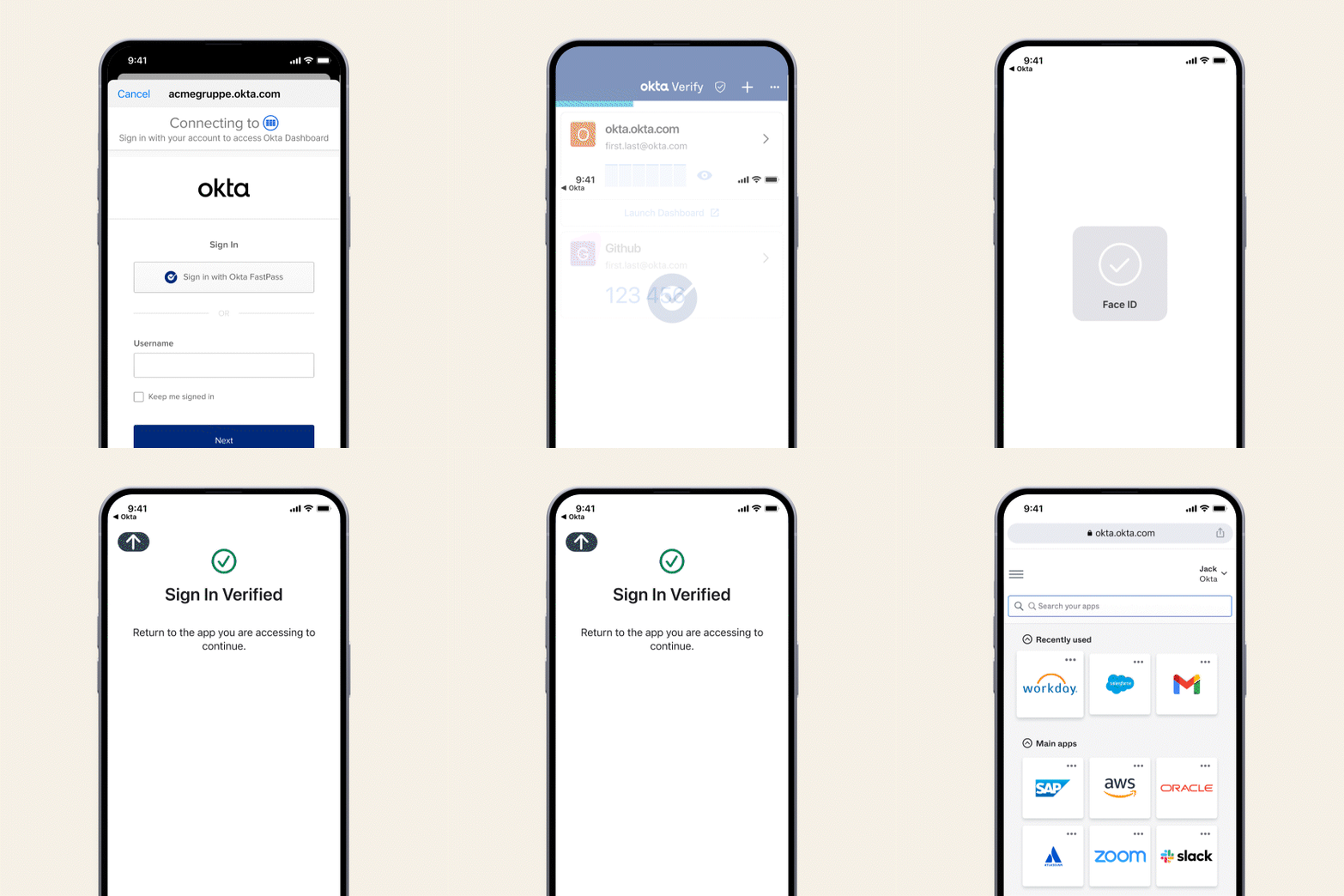
5. Device-Based Push Notifications
- Login confirmation via push notification to a trusted device.
- Example: Duo Security, Okta Verify.
📊 Comparison Table: Passwordless Methods
Here’s a comparison table :
| Method | Security Level | User Experience | Best Use Case |
|---|---|---|---|
| Biometrics | High | Seamless | Mobile apps, banking |
| Passkeys (FIDO2) | Very High | Seamless | Cross-platform apps |
| Magic Links/OTPs | Medium | Easy | SaaS, e-commerce |
| Hardware Keys | Very High | Medium (physical device) | Enterprise, developers |
Best Passwordless Authentication Tools for Developers in 2025
Here are the solutions worth considering this year:
Useful Links
- Why Developer Communities Are the New Universities in 2025
- Top Low-Code & No-Code Development Platforms for Dev Teams in 2025
- 10 High-Paying Developer Skills to Learn in 2025 for Career Growth
- Progressive Hydration Explained: The Future of Web Performance
- Best API Management Tools in 2025: A Developer’s Perspective
- How to Secure Your APIs Without Sacrificing Performance in 2025
1. Auth0 by Okta
- Offers biometrics, passkeys, OTPs.
- Integrates easily with JavaScript frameworks and APIs.
- Case Study: The UK fintech Monzo reported reduced login-related support costs after moving to Auth0 passwordless flows.
2. Firebase Authentication (Google)
- Passkey-ready with FIDO2 support.
- Built for web and mobile apps.
- Developer Note: Many indie devs on Reddit prefer Firebase for its quick integration and “Google-grade” reliability.
3. Stytch
- Focuses on magic links, OTPs, and passkeys.
- Developer-first with extensive SDKs.
- Community Insight: A Hacker News thread in 2024 praised Stytch for “removing password reset headaches entirely.”
4. Magic (Web3 + Web2 Auth)
- Provides passwordless login for both traditional apps and blockchain projects.
- Great if you’re working in Web3 + SaaS hybrid products.
5. Yubico (YubiKey)
- Hardware keys trusted by Google, GitHub, and Facebook.
- Strongest defense against phishing.
🔄Passwordless Authentication Workflow
Passwordless Workflow Example (Passkeys)
- User clicks “Login with Passkey.”
- Browser/device prompts biometric or device verification.
- Device signs a challenge with a private key.
- Server verifies the signed challenge using the public key.
- Access granted without any password exchanged.
Real-World Adoption in 2025
- PayPal & eBay → Switched to passkeys, resulting in fewer phishing reports.
- GitHub → Mandated passkeys for developers by default.
- Stripe → Testing biometric-based authentication for high-value accounts.
My Perspective
As a developer and blogger, I see passwordless authentication not as a nice-to-have but a must-have in 2025. The momentum from Google, Apple, and Microsoft means developers will face fewer implementation hurdles and users will face fewer adoption barriers.
But let’s be clear: passwordless is not one-size-fits-all. For smaller SaaS projects, magic links and Firebase might be the best choice. For enterprise, hardware keys and Okta are the way forward.
FAQs
Q1: Is passwordless authentication more secure than passwords?
Yes. Since no password is stored or transmitted, attackers have nothing to steal or reuse.
Q2: Can I implement passwordless authentication for free?
Yes, tools like Firebase Authentication offer free tiers.
Q3: Do users need special hardware?
Not always. Most devices today (smartphones, laptops) support biometrics or passkeys natively.
Q4: Is passwordless authentication good for SEO?
Indirectly, yes. Faster logins improve user experience, lowering bounce rates.
Q5: Will passwords completely disappear in 2025?
Not entirely. Legacy systems and certain use cases will still rely on them, but adoption of passkeys is accelerating.

🚀 Let's Build Something Amazing Together
Hi, I'm Abdul Rehman Khan, founder of Dev Tech Insights & Dark Tech Insights. I specialize in turning ideas into fast, scalable, and modern web solutions. From startups to enterprises, I've helped teams launch products that grow.
- ⚡ Frontend Development (HTML, CSS, JavaScript)
- 📱 MVP Development (from idea to launch)
- 📱 Mobile & Web Apps (React, Next.js, Node.js)
- 📊 Streamlit Dashboards & AI Tools
- 🔍 SEO & Web Performance Optimization
- 🛠️ Custom WordPress & Plugin Development