
Beyond Code: How Model Context Protocol (MCP) Is Letting AI Execute Real-World API Tasks

Table of Contents
Introduction – From Code Generation to Real-World Execution
Artificial Intelligence has already transformed how developers build and ship software, but a new wave of innovation is moving us beyond just code generation. For years, tools like GitHub Copilot and ChatGPT were limited to producing snippets of code that developers still had to run, debug, and integrate manually. That barrier is now beginning to break. Enter the Model Context Protocol (MCP) — a new standard that allows AI systems to interact directly with APIs, databases, and external applications.
In simple terms, MCP acts like a universal translator between AI models and the real-world tools they need to interact with. Instead of just suggesting code, an AI agent equipped with MCP can directly execute tasks: querying a database, fetching live analytics, managing cloud resources, or even triggering workflows across enterprise platforms. This is a massive shift because it reduces the “human in the loop” overhead and lets AI function more like an autonomous teammate than just a coding assistant.
My Hosting Choice
Need Fast Hosting? I Use Hostinger Business
This site runs on the Business Hosting Plan. It handles high traffic, includes NVMe storage, and makes my pages load instantly.
Get Up to 75% Off Hostinger →⚡ 30-Day Money-Back Guarantee
Why does this matter? Because businesses, startups, and developers are constantly seeking ways to reduce repetitive work and accelerate deployment. MCP provides the missing piece — a secure, standardized way for AI to call APIs safely and contextually, without the risks of uncontrolled automation. Think of it as the bridge that turns AI from being just a code generator into a real-world operator.
As this protocol gains traction, it could reshape the future of software engineering, DevOps, and AI-powered automation. In the sections ahead, we’ll explore how MCP works, its benefits, potential risks, and why it may soon become a foundational layer in modern AI development.
If you want more details, then see the pdf below

What Exactly Is Model Context Protocol (MCP)?
Model Context Protocol (MCP) is an open standard designed to bridge the gap between AI models and external tools, applications, and APIs. Traditionally, AI models like GPT have been limited to text-based reasoning within their training data. While they can generate code snippets or simulate processes, they cannot directly interact with real-world systems. MCP changes that.
Think of MCP as a universal translator and connector. It enables an AI model to “understand” and securely communicate with APIs, databases, or even third-party applications in real time. Instead of the AI only suggesting an API call, MCP lets it execute that call safely within a controlled environment.
This opens massive possibilities. For example:
- An AI assistant could book a flight by interacting directly with an airline API.
- A developer tool could let an AI query GitHub issues and automatically generate pull requests.
- A customer support bot could fetch live order data from an e-commerce backend instead of asking the user to provide details manually.
The key here is security and standardization. MCP ensures the communication channel between AI and APIs follows strict protocols, reducing risks like unauthorized access or unintended actions. It’s not just about giving AI more power—it’s about giving it safe, governed, and auditable access to real-world digital infrastructure.
In short, MCP is the backbone that transforms AI from a passive conversationalist into an active participant in the digital ecosystem.

Why MCP Matters for Developers
Model Context Protocol (MCP) isn’t just another technical buzzword—it’s a breakthrough that reshapes how developers and AI systems interact with APIs. Traditionally, developers had to handle tedious steps: managing API authentication, parsing responses, writing wrappers, and ensuring rate limits. MCP streamlines this entire workflow by giving AI the ability to act as a smart intermediary between the user and real-world APIs.
Imagine you’re building a weather app. Normally, you’d set up a weather API, fetch the data, parse it into your frontend, and manage errors. With MCP, an AI could directly query the weather API on your behalf, return structured data, and even suggest code snippets to integrate it into your project. This doesn’t just save time—it eliminates repetitive coding tasks and allows developers to focus on core logic and innovation.
Another reason MCP is so valuable is security and consistency. Since MCP defines a standard protocol, it ensures that APIs are accessed in predictable, controlled ways. Instead of dealing with inconsistent API docs or reinventing integrations, developers can rely on MCP to make calls safely and uniformly.
For AI developers, this opens up a whole new world. Instead of being limited to answering questions, AI can execute tasks in real time—from sending an email via Gmail’s API to pulling analytics from Google Search Console. Essentially, MCP empowers developers to treat AI as an actionable teammate rather than a passive assistant.
This shift matters because it bridges the gap between human intention and machine execution. The developer defines the goal, MCP standardizes the method, and AI executes the task. The result? Faster prototyping, reduced errors, and more efficient workflows.
Real-World Applications of MCP
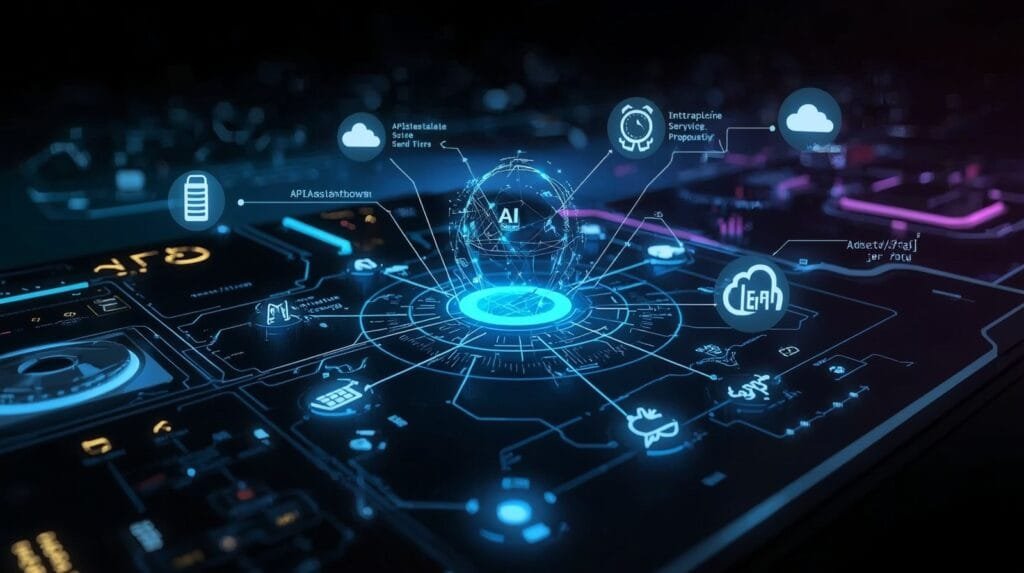
The real power of the Model Context Protocol (MCP) lies not just in its architecture but in how it transforms real-world workflows. By allowing AI systems to directly interface with APIs, MCP creates practical solutions across industries. Let’s explore a few applications:
1. Software Development Automation
Developers can connect MCP-enabled AI models to code repositories, CI/CD pipelines, and testing frameworks. For example, an AI assistant could automatically create a GitHub issue, trigger a deployment, or run unit tests without human intervention. This removes friction from routine tasks and accelerates development cycles.
Useful Links
- Microsoft AutoGen vs. CrewAI: I Ran a “Code Battle” to See Who Wins in 2026
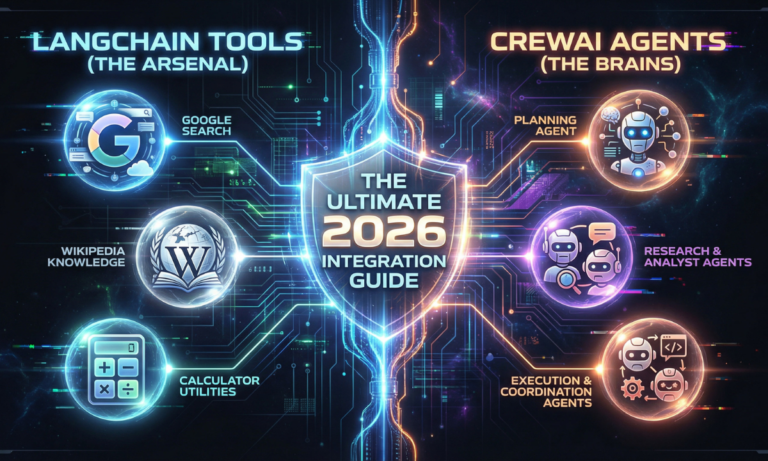
- How to Build AI Agents with LangChain and CrewAI (The Complete 2026 Guide)
- Beyond the Chatbot: Why 2026 is the Year of Agentic AI
- Why Developers Are Moving from ChatGPT to Local LLMs (2025)
- LangChain vs. LlamaIndex (2026): Which AI Framework Should You Choose?
- Toil is Back: Why Even with AI, SREs Feel the Burn in 2025
2. Customer Support and CRM
Instead of AI only generating canned responses, MCP allows direct action inside customer relationship management (CRM) systems. For example, an AI support agent could reset a customer’s password, update billing details, or log a ticket inside Zendesk or HubSpot — actions that typically required manual human handling.
3. Business Automation
Businesses are using MCP-powered AI to interact with tools like Slack, Notion, or Trello. Imagine asking your AI assistant to create a Trello card, schedule a meeting in Google Calendar, or pull analytics data from Google Analytics in real time. This bridges the gap between intent (user request) and execution (API call).
4. Healthcare and Research
In healthcare, MCP can help by automating administrative tasks, such as pulling patient reports from a database or logging updates in an EHR system. Similarly, researchers could ask the AI to fetch the latest published papers from academic APIs and summarize them instantly.
MCP is still in its early adoption stage, but these examples show how it’s evolving beyond “smart text generators” into action-oriented digital agents that directly interact with real-world systems.
Benefits and Limitations of Multi-Cloud Platforms (MCP)
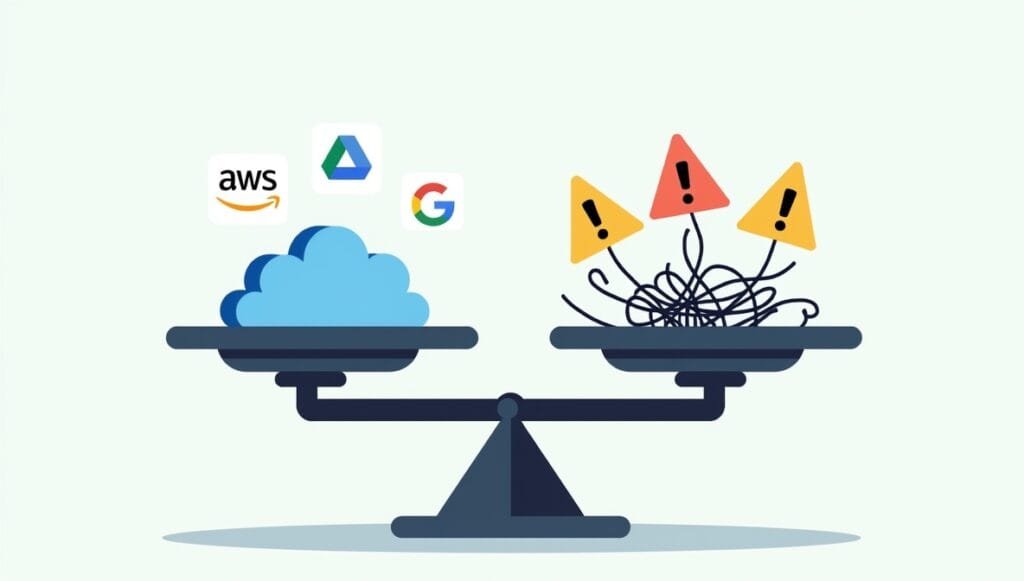
Multi-Cloud Platforms (MCPs) have become an attractive choice for organizations seeking agility, cost optimization, and resilience in their IT strategies. However, like any technological approach, MCPs come with both benefits and limitations that must be carefully weighed before adoption.
Key Benefits
- Reduced Vendor Lock-In – By distributing workloads across multiple cloud providers (AWS, Azure, Google Cloud, etc.), businesses avoid dependency on a single vendor, maintaining flexibility in pricing and features.
- Enhanced Reliability & Uptime – If one provider experiences downtime, workloads can shift to another, ensuring business continuity.
- Cost Optimization – Organizations can select the most cost-effective services across providers, leveraging competitive pricing and avoiding hidden costs.
- Access to Best-of-Breed Services – Each cloud provider has unique strengths (e.g., AI on Google Cloud, enterprise features on Azure, global reach on AWS). MCP allows organizations to leverage the best services from each ecosystem.
- Improved Compliance & Data Sovereignty – MCPs help meet regulatory requirements by distributing workloads across specific regions or providers.
Limitations
- Complexity in Management – Handling multiple environments requires advanced orchestration tools and skilled teams.
- Increased Security Risks – Each cloud introduces its own vulnerabilities, making unified security policies harder to enforce.
- Hidden Costs in Integration – While MCPs can lower vendor costs, integration, monitoring, and data transfer expenses can add up.
- Talent and Skill Gaps – Teams need expertise across different cloud ecosystems, which can increase training and hiring challenges.
- Performance Inconsistencies – Latency and performance can vary across providers, especially for global-scale applications.
In essence, MCPs are powerful enablers of resilience and innovation, but they require careful planning, governance, and automation to maximize benefits while minimizing risks.
FAQS
Q1: What is Modern Context Protocol (MCP)?
A: MCP is a next-generation protocol designed to manage context efficiently across applications, APIs, and AI-powered systems. It improves interoperability, scalability, and context-sharing between services.
Q2: How is MCP different from traditional context management protocols?
A: Unlike older protocols that were rigid and often application-specific, MCP is designed to be lightweight, flexible, and adaptable to modern cloud-native and AI-driven environments.
Q3: What are the main benefits of using MCP?
A: MCP offers faster context-switching, improved security, real-time synchronization, and better integration with microservices and distributed systems.
Q4: Are there any limitations of MCP?
A: While MCP is powerful, it’s still relatively new, meaning adoption is limited, documentation is evolving, and implementation may require specialized expertise.
Q5: Is MCP suitable for small-scale projects or only large enterprises?
A: MCP can be implemented in both small and large systems. However, smaller teams may face challenges due to limited tools and support compared to established protocols.
🎯 Conclusion
The Modern Context Protocol (MCP) is shaping up to be a game-changer in modern computing and AI-driven workflows. By offering seamless context management, it bridges the gap between traditional protocols and the needs of today’s distributed, data-heavy systems.
While it comes with some limitations, especially regarding early adoption challenges, MCP’s benefits in scalability, security, and efficiency make it a protocol worth exploring. As technology trends toward more context-aware systems—from AI chatbots to IoT devices—MCP could soon become a standard part of development workflows.
If you’re a developer, architect, or researcher, now is the right time to start learning and experimenting with MCP so you’re ahead of the curve when adoption accelerates.

🚀 Let's Build Something Amazing Together
Hi, I'm Abdul Rehman Khan, founder of Dev Tech Insights & Dark Tech Insights. I specialize in turning ideas into fast, scalable, and modern web solutions. From startups to enterprises, I've helped teams launch products that grow.
- ⚡ Frontend Development (HTML, CSS, JavaScript)
- 📱 MVP Development (from idea to launch)
- 📱 Mobile & Web Apps (React, Next.js, Node.js)
- 📊 Streamlit Dashboards & AI Tools
- 🔍 SEO & Web Performance Optimization
- 🛠️ Custom WordPress & Plugin Development