

The Most Lightweight Frontend Frameworks for 2025

Introduction
In 2025, performance is king. With users expecting lightning-fast experiences, developers are moving away from bulky frameworks and turning to leaner, faster, more efficient alternatives. In this post, we’ll explore the most lightweight frontend frameworks that you should consider for your next project.
⚡ Why Go Lightweight?
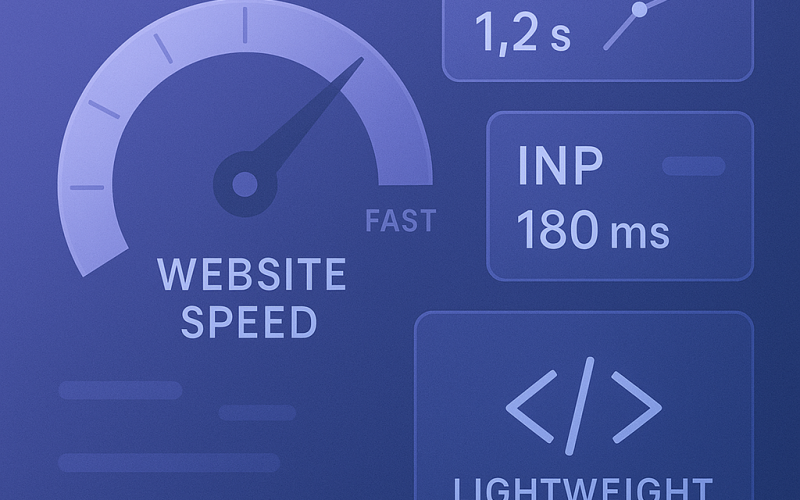
Lightweight frameworks load faster, consume fewer resources, and improve core web vitals like LCP and INP—essential for SEO and UX in 2025.
My Hosting Choice
Need Fast Hosting? I Use Hostinger Business
This site runs on the Business Hosting Plan. It handles high traffic, includes NVMe storage, and makes my pages load instantly.
Get Up to 75% Off Hostinger →⚡ 30-Day Money-Back Guarantee
Benefits include:
🔄 Faster initial load
📱 Better mobile performance
🎯 Higher SEO scores
⚙️ Improved Core Web Vitals (LCP, INP)
🏆 Top Lightweight Frontend Frameworks in 2025
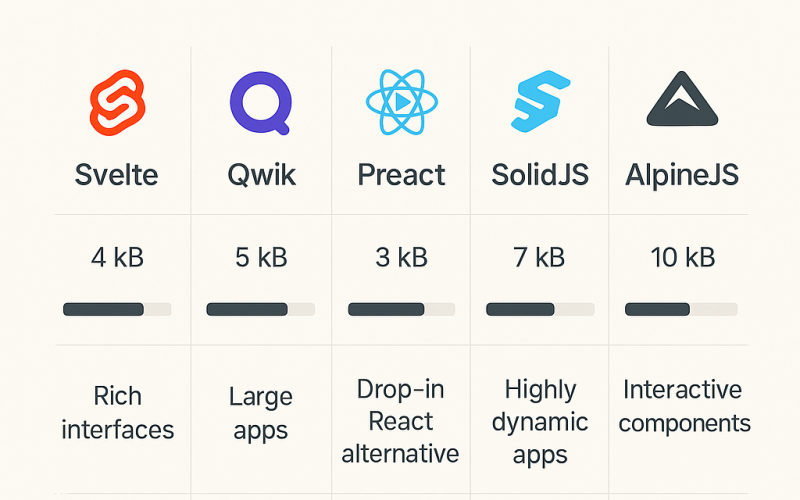
| Framework | Size (Min+Gzip) | Performance | Learning Curve | Ideal Use Case |
|---|---|---|---|---|
| Qwik | ~1KB | 🔥🔥🔥🔥🔥 | Moderate | Instant-loading web apps |
| Svelte | ~1.6KB | 🔥🔥🔥🔥 | Easy | Reactive UIs, static site gen. |
| Preact | ~3KB | 🔥🔥🔥🔥 | Moderate | Lightweight React alternative |
| SolidJS | ~6KB | 🔥🔥🔥🔥🔥 | Moderate | High-performance reactive apps |
| AlpineJS | ~10KB | 🔥🔥🔥 | Very Easy | Minimal JS in HTML apps |
🔍 Framework Deep Dive
🧬 Qwik
USP: Delivers instant interactivity by delaying JS execution until needed.
Use Case: Perfect for SEO-heavy or eCommerce apps.
Bonus: Backed by Builder.io, growing fast in adoption.
💡 Svelte
USP: Compiles to highly optimized vanilla JS.
Use Case: Ideal for interactive dashboards or small apps.
Useful Links
- Forget Selenium: Building AI Agents with browser-use & DeepSeek (The New 2026 Standard)
- The End of Localhost? Why Cloud Dev Environments (CDEs) Are Taking Over
- Cybersecurity for AI Workloads: Protecting ML Pipelines in 2025 and Beyond
- AI-Native Grads vs. Traditional Developers: The Talent War CEOs Are Betting On
- Google’s New Ranking Factor Is Quietly Killing Small Developer Blogs (2025 Guide)
- 📛 What Developers Should Stop Doing in 2025 (And What to Do Instead)
Tools: SvelteKit (for full-stack apps)
⚛️ Preact
USP: React-like API but just 3KB in size.
Use Case: Progressive web apps, lightweight SPAs.
🌐 SolidJS
USP: Fine-grained reactivity and excellent performance.
Use Case: Large apps needing reactivity + speed.
🧩 AlpineJS
USP: Tailwind of JavaScript—declarative and small.
Use Case: Simple interactions in static HTML.
📌 Conclusion
In 2025, speed, simplicity, and SEO-friendliness dominate frontend development. These lightweight frameworks empower developers to build blazing-fast, user-first apps with minimal overhead.
✨ Which one are you using in 2025? Drop your experience in the comments.

🚀 Let's Build Something Amazing Together
Hi, I'm Abdul Rehman Khan, founder of Dev Tech Insights & Dark Tech Insights. I specialize in turning ideas into fast, scalable, and modern web solutions. From startups to enterprises, I've helped teams launch products that grow.
- ⚡ Frontend Development (HTML, CSS, JavaScript)
- 📱 MVP Development (from idea to launch)
- 📱 Mobile & Web Apps (React, Next.js, Node.js)
- 📊 Streamlit Dashboards & AI Tools
- 🔍 SEO & Web Performance Optimization
- 🛠️ Custom WordPress & Plugin Development

Abdul Rehman Khan
Articles: 1642 Comments
Leave a Reply
You must be logged in to post a comment.







[…] The Most Lightweight Frontend Frameworks for 2025 […]
[…] JavaScript debugging, a mentor can guide you on when to use a lighter framework from this list of lightweight frontend frameworks or whether you should learn GitHub Actions to boost your career […]